Introduction: The Rise of Projector for Public Art India
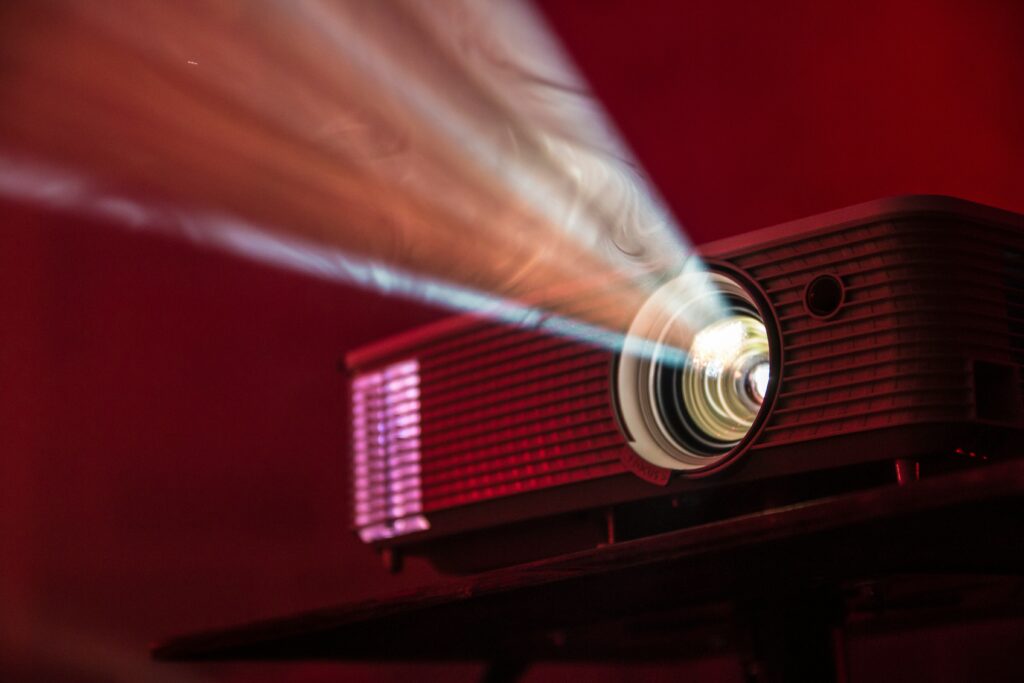
In the bustling streets of Delhi, the historic lanes of Kolkata, and the coastal promenades of Chennai, a new visual language is emerging. Artists and cultural curators are turning buildings, monuments, and open plazas into living canvases using a projector for public art India. Unlike permanent murals, projection offers flexibility, low cost, and the ability to update content in real time, making it a powerful tool for community storytelling and urban revitalisation.
Why Projector Rentals Are Changing Public Art in India
Traditional public art in India often relied on stone statues or painted murals, which, while timeless, are static and require substantial funding and bureaucratic approvals. Projector rentals break those barriers. With a portable outdoor projector rentals art solution, a local NGO can illuminate a metro station for a week, a college can project a digital poetry slam onto a heritage wall, and a city festival can showcase a digital art installations India showcase without permanent alteration.
- Cost‑effective: A 4K laser projector can be hired for as little as ₹15,000 per day, compared to the lakhs spent on permanent sculptures.
- Flexibility: Content can be swapped overnight, allowing seasonal themes, festival celebrations, or emergency messages.
- Community participation: Residents can submit videos, photographs, or animations that become part of a community projection mapping India event.
Key Projects Showcasing the Power of Projection
The Indian art scene is already testing the limits of this technology. At the 4th Kolkata International Art Exhibition 2026, a collective of young artists used high‑lumens projectors to create an immersive temporary visual displays India experience on the Howrah Bridge, narrating stories of riverine life as commuters passed beneath. Similarly, the Kalaa Spandan Art Fair in Delhi (April 2026) featured a cultural storytelling projectors India installation where historic photographs of Old Delhi were animated onto the walls of Chandni Chowk, sparking dialogue about heritage preservation.
Government initiatives are also paving the way. The newly launched Project PARI – Public Art of India explicitly encourages the use of new media, including projection mapping, across streets, parks, and metro stations. One notable success is the nightly projection at Qutub Minar, where a public space visual transformation dramatizes stories of Indian villages, blending folklore with contemporary visual effects.
How to Choose the Right Projector for Public Art India
Finding the perfect machine is crucial for a seamless experience. Below are the key parameters you should evaluate before booking a rental:
- Brightness (lumens): Outdoor spaces typically require 20,000–30,000 lumens for clear images after sunset. For shaded alleys or indoor‑outdoor hybrids, 10,000–15,000 lumens may suffice.
- Resolution: Full HD (1920×1080) is adequate for text‑heavy content, but 4K (3840×2160) delivers sharper detail for intricate artwork, especially when projecting onto textured stone surfaces like the Qutub Minar.
- Throw distance and lens flexibility: Short‑throw lenses are essential when the projector must sit close to the surface, while interchangeable lenses help cover larger walls without distortion.
- Portability & power: Many Indian festivals run on generator power; choose a unit with low power consumption (under 400 W) and a robust mounting system.
- Rental support: Look for providers that include on‑site setup, a technician, and a backup lamp. projectoronrent.online offers a comprehensive package that meets these criteria.
Practical Steps to Launch Your Own Outdoor Projection
Turning an idea into a community‑wide visual event can be broken down into six actionable steps:
- Define the story: Identify a local narrative—whether it’s a folk legend, a city’s history, or a contemporary social issue.
- Secure permissions: Approach the municipal corporation, heritage board, or mall management early. Many jurisdictions now have a fast‑track approval for digital art under Project PARI.
- Choose the venue and surface: Flat brick walls, concrete facades, or even water screens work well. Test surface colour; white or light‑coloured surfaces improve contrast.
- Source content: Collaborate with local artists, students, or NGOs to create 2D animations, 3D models, or video loops. Keep file sizes under 2 GB for smoother playback.
- Rent the hardware: Contact a trusted rental house; for a three‑day event in Mumbai’s Marine Drive, a 4K laser projector with a motorised mount typically costs ₹45,000‑₹55,000 inclusive of tech support.
- Test and promote: Conduct a dry run at least 24 hours before the launch. Use social media, community radio, and flyers to invite residents.
Remember, the magic lies in the interaction between light and the public. A well‑timed projection during a monsoon evening can turn a mundane street into an unforgettable theatre of light.
FAQs: Your Common Queries About Projector Rentals for Public Art
- Q: How much does an outdoor projector rental cost in India?
A: Prices vary by lumen output, resolution and support services. A basic 10,000‑lumens HD unit starts at ₹8,000‑₹12,000 per day, while a premium 30,000‑lumens 4K laser can range from ₹15,000‑₹25,000 per day. Packages that include technician, cable routing and insurance typically add another ₹3,000‑₹5,000. - Q: Do I need a special permit for projection mapping on heritage sites?
A: Yes. Heritage authorities like the Archaeological Survey of India (ASI) require a detailed proposal, including content preview and safety measures. Under Project PARI, many cities have a streamlined consent form for digital installations, but you should start the application at least 45 days ahead of the event. - Q: Can I use a projector for interactive community art?
A: Absolutely. By integrating motion sensors or smartphone‑based QR code triggers, audiences can change the visuals in real time. This approach was used in Pune’s ‘Pulse of the City’ project, where locals could upload short clips that were instantly projected onto a downtown flyover. - Q: What is the typical power requirement for a large‑scale outdoor projector?
A: High‑lumens laser projectors usually draw 300‑500 W. For festivals without reliable grid power, a 2‑kVA generator or a battery‑backed UPS is recommended. - Q: How long can a projector run continuously?
A: Most modern laser projectors can operate 8‑10 hours before a lamp change is required, but LED‑based models can run up to 20 hours. Always consult the rental provider for the specific runtime and warranty.
Conclusion: Bring Your Vision to Life with Projector for Public Art India
From illuminating the ancient arches of Qutub Minar to turning the bustling streets of Kolkata into a night‑time gallery, a projector for public art India is more than just a piece of equipment—it’s a catalyst for cultural pride, community dialogue, and urban renewal. When you partner with a reliable rental service like projectoronrent.online, you gain access to the latest laser technology, expert technicians, and flexible pricing that makes large‑scale visual storytelling affordable for artists, NGOs, and city planners alike.
Ready to transform your next public event into a luminous experience? Visit projectoronrent.online today, explore the catalogue of high‑lumens projectors, and start planning a visual masterpiece that will resonate across your community.